Or You Should (NOT) Watch EVANGELION
In which I go over the show that everyone has already (re)gone over and over and over

ALL ABOUT EVA
If you hadn't heard, Neon Genesis Evangelion is back. Netflix just licensed it and even commissioned a new dub and translation to boot. While it is an important, it isn't just the show that is returning. It's everything that comes with it.
You can't talk about Evangelion without talking about the baggage-- all twenty-five years of it*-- that comes with. It's a show that can't escape its own gravity. Neither can pop culture.
Evangelion is a show that has been speculated about, denigrated, lamented, and imitated, and for years almost all of this has been afrom a distance. A conversation that is as much informed by nostalgia as anything else. Now it's back, fully accessible to anyone with a Netflix password and, at long last, we can re-litigate on of the greatest Japanese animes of all time.
Now that I’ve rewatched Evangelion for the first time in nineteen
years, I’ve realized a lot of things. The first is that all of the critics of
this show are right. It's a show that's aged remarkably well, if only because the things it fucks up-- the roughshod ending, the lack of focus, the abject sexism-- were all known to suck in 1996. The second thing that struck me is just how enjoyable it still is.
Austin Walker** often speaks of the Gundam series in a similar tone. Even the good Gundam it's still a series rife with bullshit. Fan service, stories that drag on, monsters of the week ad nauseam, and so forth. Despite that, he is a fan and that is because he knows that the worth of a work is more than one or two things. It isn't arithmatic. It's still art and it is still something that has to be reckoned with-- even the dumb robot shows.
To love Evangelion is to accept that it's a mess. It's an rough canvas, unfinished. And despite that, it's also one of the coolest giant robot shows ever made and that it has a great soundtrack and also has a giant penguin that just hangs out in the background of scenes for no real reason other than it's a giant penguin.
That’s what the show is. It’s beautiful. It’s terrible. It’s motherfucking Eva, baby.
That’s what the show is. It’s beautiful. It’s terrible. It’s motherfucking Eva, baby.
 |
| I feel like I saved this picture because I was going to make a joke, and now it's gone, so instead, here's a depressed teenager. |
POR QUE, EVA?
What I'm saying is that Evangelion has styyyyyyyyyyle.
 |
| There's another version of this essay where I discussed how Nausicaa relates to Evangelion, but I'm annoyed and tired, so let's just pretend I did, okay? |
I recently watched Pulp Fiction with my teenage niece and
nephew and they left the viewing being less than entirely impressed. While a
good bit of that can be chalked up to them being dumb teenagers and poor sound
quality of the stream, I think a good part of it is just the fact that Pulp
Fiction, to them, is not a unique artifact. So many movies and TV shows have
played off of what Pulp Fiction did (which was to copy a lot of other movies)
that to see it in its original form isn’t very impressive. It’s like listening
to the Sex Pistols. If you don’t have disco and Barry Manilow and prog rock to
compare it to, it’s just four dickheads playing instruments poorly.
Neon Genesis Evangelion, like Pulp Fiction, has the same
kind of legacy. It’s the genre work that escaped its enclosure. It’s a work
that came into being as a sort of fan letter to other works in the genre
(Ultraman, Gundam, Toho monster movies, etc etc etc), but it ended up having an
influence larger than the works it was derived from. In short, it’s fairly
similar to what happens when people with talent and discipline listen to punk and decide to start their own bands.
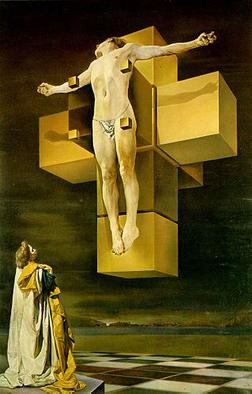 |
| Hey, kids, let me tell you about the first guy to rip off Old Testament imagery, that's right, Hyper-Jesus. |
Third, Neon Genesis Evangelion is a master class in messy
storytelling. Not that you need a second ironic reason to watch the show, but the ending(s) aside, Evangelion is broken on a fundamental level. Budget problems
(allegedly), production delays (definitely), and the auteur at the center of it
calling audibles half of the way through the run of the show are but three reasons as to why it's such a patchy show.
Is it a good
mystery? Is it deliberate storytelling? Or did they just forget and get bored?
Is it ambiguous or did they fail to follow up on a plot point? Both? Neither?
Does it matter?
Frankly, if somebody sane and with a healthy respect for
production made Evangelion it might be better, but it wouldn’t be Eva. From a
critical point of view, the cracks in the foundation are the foundation.
Lastly, Neon Genesis Evangelion is actually a kind of good
robot show?****
Despite its odious lows, Evangelion still hits some incredible high points. When it fires on all cylinders, it's one of the best giant robot shows ever made. I mean, there's an episode where they have to use a giant sniper rifle to shoot one of the Angels and in order to get it running, they have to use the power of the entire island of Japan. It's awesome.
Despite its odious lows, Evangelion still hits some incredible high points. When it fires on all cylinders, it's one of the best giant robot shows ever made. I mean, there's an episode where they have to use a giant sniper rifle to shoot one of the Angels and in order to get it running, they have to use the power of the entire island of Japan. It's awesome.
Sure, the last two episodes suck ass drudges and the movie
is, uh, of similarly cut cloth, but in between its moments of shoe-gazing and its male gaze, it manages to be a neat and unique TV.
There are my four reasons. It’s unique. It’s influential.
It’s important as an artifact of storytelling. And Shinji punches those
monsters good.
But also fuck this dumb show.
 |
| Brilliant, stupid, or just plain awesome? The answer is: Yes. |
THE EVA-PHANT IN THE ROOM
How it treats its adult female characters isn't much better (but at least it isn't a crime). It reduces them to basic traditional roles-- mother and wife (or, well, giant robot, but is that not just a type of a mother? A giant, berserk mother built of bone and steel? Think about it). And then, as a kicker, after it reduces them to these roles, it then judges them for being in these roles. Misato is a slut. Ritsuko is a jilted lover (ditto her mom, who has literally been reduced to these roles via the Magi computer system).
So, not only is it juvenile and reductive, it's also hypocritical.
And that isn't to say that featuring teenage sexuality is a total non-starter. It is possible to have your cake and to eat it too-- or at the very least there is a way to titillate and to talk about teenage sexuality without undercutting your characters. Without being a pervert. Without being a generally unpleasant weirdo.
Fast Times at Ridgemont High is a movie that manages to do both. It's a movie that features nudity, that celebrates (responsible) sexual activity and desire, and it also makes fun of and judges when people use sex irresponsibly or to hurt other people. In short, it uses a visual medium to portray an aspect of humanity in a complex light.
(There's also Karate Kid, which is a really chaste portrayal of high school romance and, I don't now, Lolita which manages to make a comedy out of pederasty. There's also TV shows like Riverdale, which are dumber than dogshit twice run over, and it still doesn't ever become creepy. What I'm saying is get it together Anno. Jesus.)
On my rewatch of Eva, I was struck by how obvious this problem is from the very beginning. And then I remembered that even at the age of thirteen I was always slightly embarassed and creeped out.
As I said earlier, some things age well because we knew it sucked them.
There is no rationalizing, there's no getting around it: Neon Genesis Evangelion has a problem with women.
God almighty, does it have a problem with women. It both doesn't know how to write female characters nor does it seem to have any sort of affection for them. When it does have affection for them, it's for their bodies. It is a show that, at best, has some deeply unpleasant opinions about women.
And before I get into it into it, I want to point out that this is an abridged sally against this show's deeply weird brand of misogyny.
It's a show that doesn't quite know how to handle its female characters, except when it does and it's a pile of vitriolic, Stone Age-sexism. This is made all the more depressing by the fact that Anno-- and presumably his team of collaborators-- are aiming for profundity when it explores the inner lives of its characters. This makes its fumbling portrayals all the more striking. Instead of original and interesting statements about its female characters, what we get instead are Psych 101 level course notes. It's shallow, sad, and lame. It's a show about teenagers with the understanding of a teenager.
While there are stand-out moments (like when Asuka kicks ass or any time Misato is forced to jerry-rig a plan together), these moments are undercut by reducing these women to their most basic constituent parts (if you're a dullard): Mother and/or Lover. They can't be pilots or scientists or, uh, giant robots (which is literally just a giant mom in this case, but anyways), they are Mothers and/or Lovers first (and ultimately). Any attempt to stray from this path results in failure, torture, and death. Or all three. Or you turn into a giant space god. I don't know, anime.
Beyond that, you have the arcs of Rei (who Anno admitted stopped developing after episode six, when her arc is literally "You should smile more," which is probably less of a gross trope in Japan, but boy howdy, does this show not deserve a generous reading when it comes to women) and the arc of Ritsuko (who is a scorned women, like her mom) and Misato ("Slut, slut, sluuuuuut!") and Asuka (who tries hard and kicks ass, but can only try so hard and kick so much ass, because at the end of the day, she is there to be gawked at). Sure, Shinji gets his ass kicked quite a lot, but his entire purpose in the show is to be told that he matters. His arc is the one that matters. His story is the one that needs to be told. In the end (of Evangelion), all women are ultimately accessories to this dumb, shitty boy's journey (and, indeed to the audience's journey).
Women. Lover. That's it. Those are your options.
Then there's the T and A. Ugh. Alright-- I wanted this to be a quick segment, because I hate talking about this shit and I'm sure you don't want to read it, but it would be dishonest to blow past it-- but this show loves to sexualize its underage girl cast.
How it treats its adult female characters isn't much better (but at least it isn't a crime). It reduces them to basic traditional roles-- mother and wife (or, well, giant robot, but is that not just a type of a mother? A giant, berserk mother built of bone and steel? Think about it). And then, as a kicker, after it reduces them to these roles, it then judges them for being in these roles. Misato is a slut. Ritsuko is a jilted lover (ditto her mom, who has literally been reduced to these roles via the Magi computer system).
So, not only is it juvenile and reductive, it's also hypocritical.
And that isn't to say that featuring teenage sexuality is a total non-starter. It is possible to have your cake and to eat it too-- or at the very least there is a way to titillate and to talk about teenage sexuality without undercutting your characters. Without being a pervert. Without being a generally unpleasant weirdo.
Fast Times at Ridgemont High is a movie that manages to do both. It's a movie that features nudity, that celebrates (responsible) sexual activity and desire, and it also makes fun of and judges when people use sex irresponsibly or to hurt other people. In short, it uses a visual medium to portray an aspect of humanity in a complex light.
(There's also Karate Kid, which is a really chaste portrayal of high school romance and, I don't now, Lolita which manages to make a comedy out of pederasty. There's also TV shows like Riverdale, which are dumber than dogshit twice run over, and it still doesn't ever become creepy. What I'm saying is get it together Anno. Jesus.)
As I said earlier, some things age well because we knew it sucked them.
LET'S GET OUT OF HERE ALREADY
If you hate it, I get it. There’s enough wrong with it to
fuel a thousand hours to forward facing You Tube rants. It’s not like Tom
Petty. It’s not like if you don’t like Evangelion it makes you a bad person. I
mean, Shinji Ikari would hate this show and he’s on this show.
It’s also fun to go back and realize just how much this show
has shaped my taste in things. The music. The terror of the aliens. The body
horror. The gore. The fetishistic attention to mechanical details. The computer
screen insert shots—name one show that has better insert shots of computer
screens. You can’t because Eva has the best shots of screens and displays, and you know it. All of those
things have stuck with me.
Evangelion is a show that I love and hate. To engage with it is to understand engage with both of these concepts and to understand that these are not mutually exclusive ideas. Evangelion is (not) a good show and that's what I love it.
Evangelion is a show that I love and hate. To engage with it is to understand engage with both of these concepts and to understand that these are not mutually exclusive ideas. Evangelion is (not) a good show and that's what I love it.
In general this has been a season of realizations for me.
I’m glad that Eva is at least one thing that I can put to bed.
FOOTNOTES:
FOOTNOTES:
* That many? Really? When the fuck did that happen? Also, how is this show still coming out? Why is it still coming out for that matter. I guess I agree with this take on Evangelion, elucidated by one of the writers of the film Mandy: That Anno himself cannot help but go back to the well. Because he is compelled enough by the material that he can't escape it. There's something about this show, how messy it is, how appealing it is, that keeps him from going back-- or at least escaped.On a more cynical level, I'm sure the money helps.
** If I were a better essay writer, I would have found the time and the space to talk about this tweet specifically. I like how Walker frames Evangelion as both a seminal work of art that he loves, but also a show that he knows is fundamentally fucked-up and problematic. I like even erudite and politically aware cultural critics still have room in their heart for screwy robot shows. I also like that guys like Walker and his crew at Waypoint/Vice Gaming are out there doing the heavy-lifting so I can keep these essays short.
*** Maybe“infamous” would do
better. I touched on it briefly above, but Evangelion, like a lot of Japanese animation, has attracted the worst sorts of people. Perverts. Weirdos. Would-be pederasts. Generally unpleasant dickheads. Which wouldn't be a problem if the show didn't encourage a lot of these people. Over and over again Evangelion (and thereby Anno and the production company, Gainax), sexualize the children. Ugh. I don't even want to get into it, but it's bad. It's bad that the show did it and it's bad that it attracts people that, you know, have very specific feelings about how cartoon child pornography are peachy keen (I can't find the specific article, but apparently the current translator of Evangelion apparently holds such opinions). Plus, also maybe Anno himself gave one of the cast members some real creeptastic directions once. Blech.
**** On that note, if you want to see a straight-up monster movie, Hideaki Anno's Shin Godzilla is a hell of a movie. Very different from the 2014 Godzilla. It is also a movie worth your time even if you hate Evangelion.
***** In that way GoT can also join an even more odious group of series finales that I keep: Shows I wasn't disappointed with because I already knew they were going to suck. It's one of the hollow victories where I never get let down because I never had any expectations. Way to go me.
James Kislingbury is a writer, podcaster, and will not get in the EVA. Must be losing his touch. You can listen to him here and here. You can shovel piles of lucre at him here and here.


